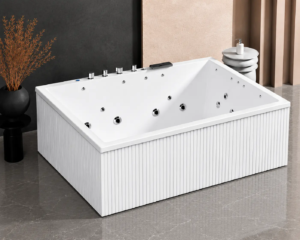
By the Acrozet team, makers of custom saunas, steam generators and whirlpool bathtubs in Halvad, Gujarat
You have decided to add a wellness room to your home, villa or hotel. Then the first question arrives: sauna or steam? Both look like small hot rooms, and many people use the words as if they mean the same thing. They do not.
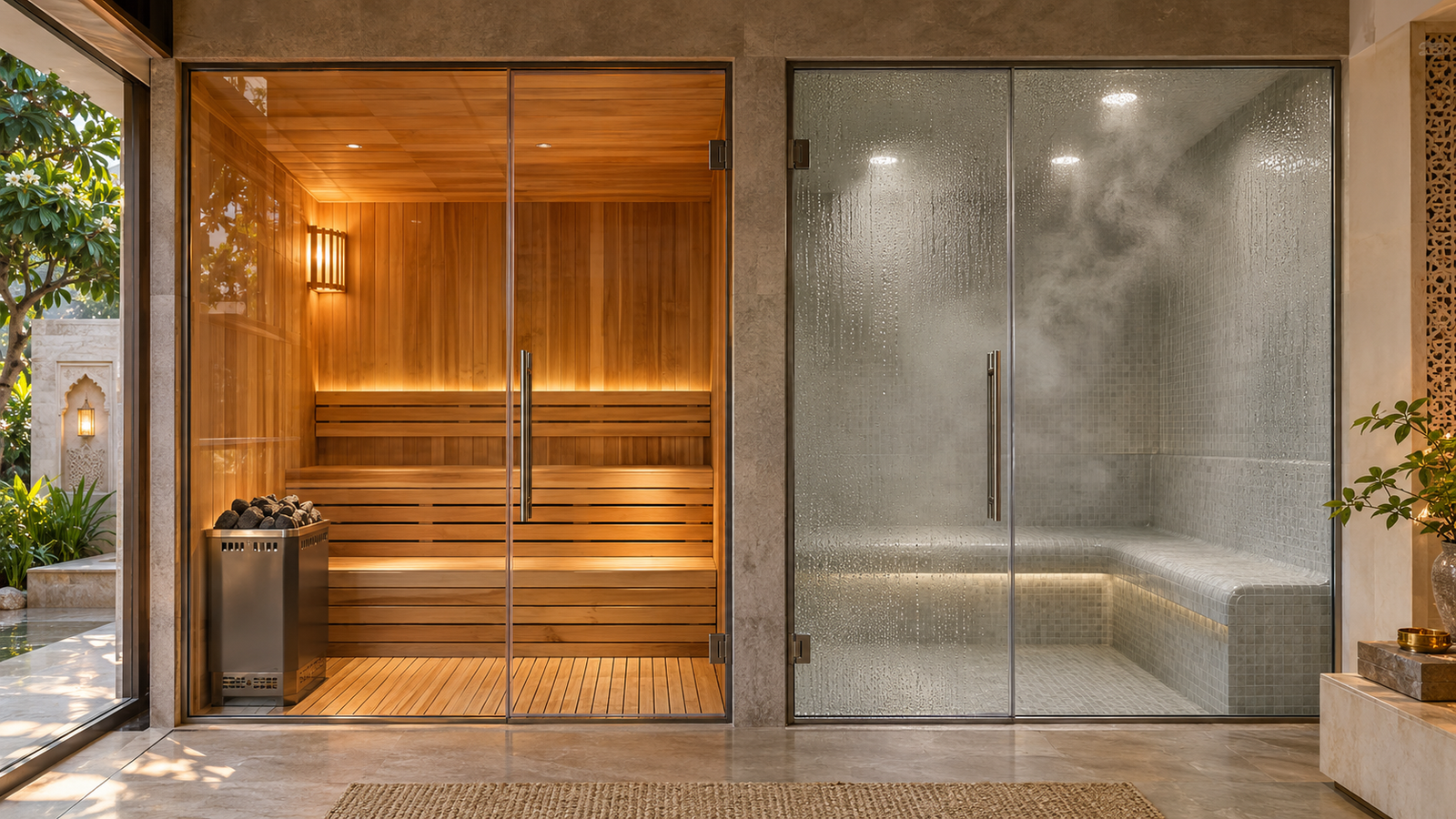
The main difference between sauna and steam bath is the type of heat. A sauna uses dry heat, usually 70–90°C, with low humidity of about 10–20%. A steam bath, or steam room, runs cooler at 40–50°C, but the air is close to 100% humidity. That one difference changes how each room feels, what it helps with, how it is built and how you look after it. This guide walks you through each point so you can choose with confidence.
What is a sauna?
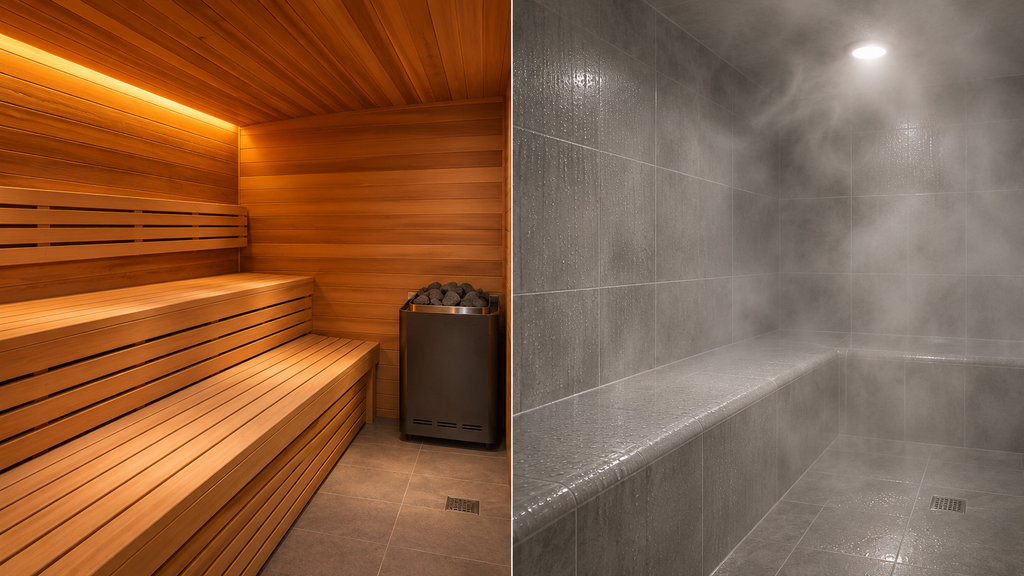
A sauna is a wood-lined room heated by a sauna heater. The heater warms a bed of stones, and the stones heat the air. Traditional Finnish-style saunas run at 70–90°C. You can pour a ladle of water on the stones for a short burst of steam (the Finns call it löyly), but the room stays mostly dry.
Saunas are built from softwoods such as Canadian cedar or hemlock. These woods stay cool enough to touch, handle heat without cracking, and give the room its familiar woody smell.
There are two main heating types:
- Traditional sauna: an electric or wood-fired heater with stones. High air temperature and the classic sauna feel.
- Infrared sauna: infrared panels warm your body directly rather than the air. The air stays at around 45–60°C, so the session feels gentler.
Every Acrozet custom sauna for home is built to your space in cedar or hemlock, with a traditional or infrared heater, for indoor or outdoor installation.
What is a steam bath (steam room)?
A steam bath is a sealed, tiled room filled with steam from a steam generator. The generator boils water beside or outside the room and sends steam in through a steam head. The air fills with moisture until it is almost fully saturated.
Wet air carries heat to your skin far better than dry air. That is why 45°C in a steam room can feel as intense as 80°C in a sauna. Your sweat cannot evaporate in that humidity, so it collects on your skin along with the condensation.
Steam rooms are built from non-porous materials such as ceramic tiles, stone, glass or acrylic, never wood. They need a vapour-proof enclosure, a sloped ceiling so condensation runs down the walls instead of dripping on you, and a floor drain.

Sauna vs steam room: side-by-side comparison
If you only read one part of this guide, make it this table. It sums up the difference between sauna and steam room at a glance.
| Feature | Sauna | Steam bath / steam room |
| Type of heat | Dry heat | Moist (wet) heat |
| Temperature | 70–90°C (infrared: 45–60°C) | 40–50°C |
| Humidity | 10–20% | Close to 100% |
| Heat source | Sauna heater and stones, or infrared panels | Steam generator |
| Room material | Cedar or hemlock wood | Tiles, stone, glass or acrylic |
| Warm-up time | About 30–60 minutes | About 10–20 minutes |
| Typical session | 10–15 minutes, with breaks | 10–15 minutes |
| Feels like | Hot, dry, easy to breathe | Warm, thick, misty air |
| Water needed | Almost none | Continuous water supply and a floor drain |
| Main upkeep | Clean benches, keep the wood dry | Descale the generator, clean grout, prevent mould |
Sauna vs steam room benefits
Both rooms raise your body temperature, make you sweat and help you relax. Most people use either one for 10–15 calm minutes after a workout or at the end of the day. Beyond that, each has its own strengths.
Sauna benefits
- Muscle relaxation and recovery: dry heat loosens tight muscles after exercise or a long day.
- Relaxation and better sleep: many users find an evening sauna helps them unwind.
- Heart and circulation: long-running Finnish studies link regular sauna bathing with better cardiovascular health, though more research is needed.
- Easier breathing: dry air suits people who find humid air heavy.
Steam bath benefits
- Clearer breathing: moist air can ease a blocked nose and chest congestion during a cold.
- Skin hydration: steam opens pores and leaves skin feeling soft and clean.
- Gentler temperature: the lower air temperature suits people who find a sauna too hot.
- Quick sessions: a steam room is ready in minutes, which suits busy mornings and hotel guests.
Heat therapy is not suitable for everyone. If you are pregnant, have heart disease, low or high blood pressure, or any medical condition, speak to your doctor before using a sauna or steam room.
Sauna or steam: which is better?
Neither is better for everyone. The right choice depends on your goal, your climate, your space and who will use it.
1. Choose a sauna for recovery and dry heat
A sauna suits people who want deep relaxation. It is the better pick for post-workout muscle recovery, for anyone who prefers dry heat and easy breathing, and for outdoor wellness cabins in a garden, terrace or farmhouse. It also uses almost no water and needs simpler plumbing.
2. Choose a steam bath for skin and breathing
A steam bath suits people who want moisture and quick sessions. Pick steam if your main goals are skin care and clearer breathing, if you like a lower temperature, or if you are already renovating a bathroom and can fit a sealed, tiled enclosure or steam shower.
3. Think about your city’s climate
India’s weather changes the answer. In humid coastal cities such as Mumbai, Chennai or Kochi, a dry sauna often feels more refreshing than adding more moisture. In drier or colder places, such as Rajasthan, Delhi NCR in winter or hill stations, many homeowners enjoy the moisture of a steam bath.
4. For hotels, resorts and spas, offer both
Guests expect a full spa circuit. Most hotels and resorts install a dry sauna and a steam room side by side, often next to whirlpool bathtubs or a hydrotherapy zone. Offering both lets guests choose and lets you price a complete spa experience.
Difference between sauna and steam room installation
The build is where the two rooms differ the most, so plan this before you decide.
Installing a sauna
- Space: even a 4 x 4 ft corner can fit a one- or two-person sauna; family saunas start at around 6 x 6 ft.
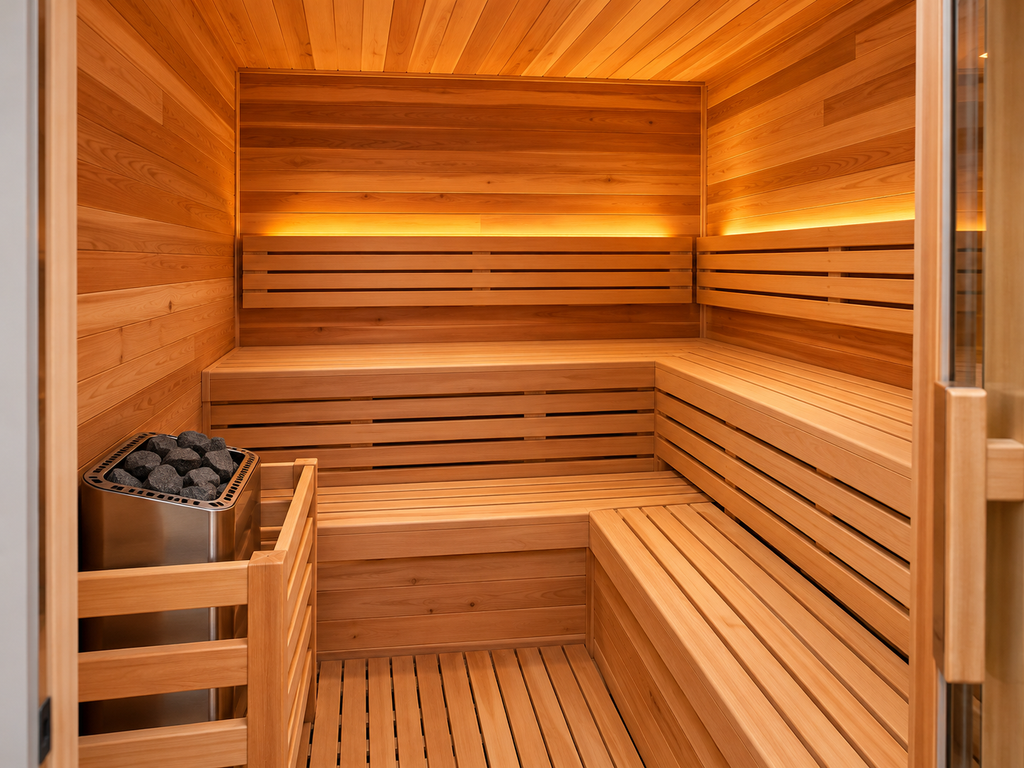
- Construction: insulated walls lined with cedar or hemlock, wooden benches, and a glass or wooden door.
- Power: a dedicated electrical line sized for the heater. Your electrician confirms the load.
- Ventilation: a fresh-air inlet near the heater and an outlet higher up on the opposite wall.
- Water: none needed inside the room, apart from a bucket for the stones.
Installing a steam room
- Enclosure: fully sealed walls and ceiling, with a waterproof and vapour-proof membrane under the tiles.
- Ceiling: sloped, so condensation runs down instead of dripping.
- Steam generator: placed in a dry, ventilated spot close to the room. Its power is sized to the room volume and wall material; glass and stone need more power than an acrylic cabin.
- Plumbing: a water inlet to the generator and a floor drain in the room.
- Controls: a panel inside or outside the room to set temperature and session time.
The Acrozet AZ-S1 steam generator comes in 3–12 kW models with an optional touch panel, so it can be matched to anything from a compact steam shower to a hotel steam room.
Maintenance: what each room needs
1. Sauna upkeep
A sauna is easy to look after. Wipe the benches after use, keep the room ventilated so the wood dries out, and check the heater stones once a year. A well-built cedar sauna can last for decades.
2. Steam room upkeep
Hard water is the main enemy of a steam room. Much of India has hard water, which leaves scale inside steam generators. Descale on schedule and use an auto-drain feature if your generator has one. Clean the grout and glass often, and let the room air out after each use to stop mould.
How to use a sauna or steam bath safely
- Shower before you go in
- Start with 8–10 minutes and build up to 15; do not go past 20 minutes
- Sit on a towel and stay on the lower bench if the heat feels strong
- Cool down with a lukewarm shower between rounds
- Drink 2–3 glasses of water after your session
- Avoid using either room after a heavy meal or alcohol, and step out at once if you feel dizzy
Frequently asked questions
Is a steam room also a sauna?
No. People often use the words loosely, but a sauna uses dry heat in a wooden room, while a steam room uses moist heat in a tiled room.
Steam bath vs sauna: which is better for skin?
A steam bath is usually better for skin hydration, as the moisture softens the skin and opens pores. A sauna also cleanses through sweat but can leave skin feeling drier.
Which is better for weight loss, sauna or steam?
Neither burns fat in a meaningful way. Most of the weight you lose in a session is water, and it comes back when you drink. Use both for recovery and relaxation, not weight loss.
Should you shower after a sauna or steam bath?
Yes. A lukewarm or cool shower rinses off sweat and helps your body return to its normal temperature.
How long should you stay in a sauna or steam room?
Around 10–15 minutes per round is a sensible range for most healthy adults. Beginners should start with 5–8 minutes.
Can I have both a sauna and a steam room at home?
Yes. Many villas and farmhouses build a compact sauna next to a steam shower so they share one wellness area. Acrozet can design both together.
The bottom line
A sauna gives you dry, intense heat for muscle recovery and deep relaxation. A steam bath gives you gentler, moist heat for skin and breathing. Your goal, your city’s climate and the space you have will point you to the right one, and for hotels and larger homes, the answer is often both.
Acrozet manufactures custom saunas, steam generators, whirlpool bathtubs and bathtub faucets at its own factory in Halvad, Gujarat, so you buy direct at factory pricing with installation guidance and after-sales support from one team.
Planning a sauna or steam room? Get a free quote or WhatsApp Ashvin Patel on +91 97123 45414.
Acrozet, Survey No. 276/P1/P2, Ranjitgadh, Halvad, Morbi, Gujarat 363330.